Home › Guides › Wet crawl space
Wet Crawl Space: What Causes It and How to Fix It
Water under the house rarely fixes itself. It rots joists, feeds mold and pulls musty air into the rooms above. The good news: most of it comes from one of five sources, and each one has a clear fix.
By the Kannapolis Water Damage Restoration team · Updated October 2026
Where the water comes from
Look at when the water shows up and where it collects. That usually points straight at the cause.
| What you see | Likely cause | What fixes it |
|---|---|---|
| Puddles after heavy rain | Gutters or downspouts dumping water at the foundation, or soil sloping toward the house | Extend downspouts and regrade the soil |
| Wet in one spot, under a bathroom or kitchen | A leaking supply line, drain pipe or toilet seal | Plumbing repair, then drying |
| Damp joists and sweating ducts in summer | Humid outside air coming in through the vents and condensing on cool surfaces | A vapor barrier and dehumidifier, or sealing the crawl space |
| Water seeping through the block walls | Groundwater pushing in after long rainy stretches | Interior drainage and a sump pump |
| Wet under the air handler | A clogged or disconnected AC condensate line | Clear or reconnect the line |
Why Kannapolis homes stay damp underneath
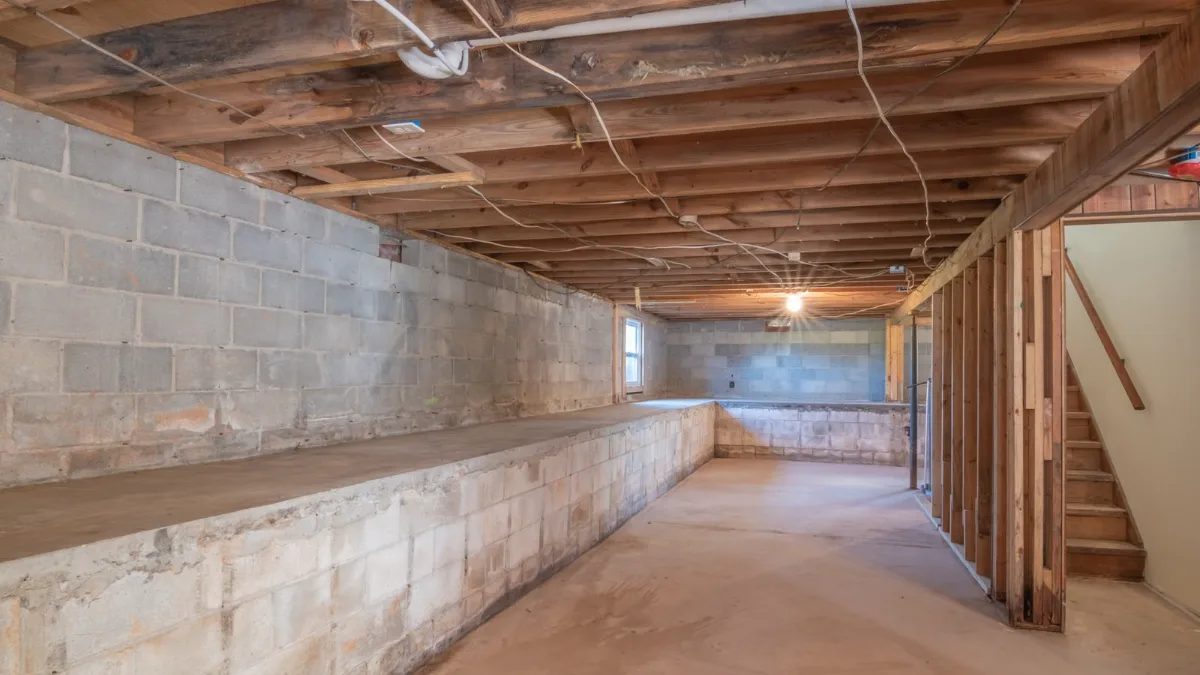
The red clay soil around here holds water and drains slowly. After a few days of rain, the ground under a house can stay soaked for a week.
Summers here are hot and sticky. Foundation vents pull that muggy air underneath, where it hits cooler ducts, pipes and framing and turns to water.
Many older homes around the mill neighborhoods sit on vented block foundations with bare dirt below. Without a vapor barrier, moisture rises out of the ground all year.
Signs the moisture is already doing damage
- A musty smell in the house, especially on humid days
- Floors that feel soft, bouncy or uneven
- Hardwood boards cupping or gaps opening up
- Insulation sagging or falling from between the joists
- Dark spots or fuzzy growth on the wood framing
Any one of these means the problem has been going on for a while. Wood that stays wet long enough starts to rot.
How to dry it out and keep it dry
Fix the source first, or the water just comes back. Then get the moisture out of the space.
- Clean gutters and run downspouts several feet away from the house
- Grade the soil so it slopes away from the foundation
- Repair any plumbing leaks under the floor
- Lay a sealed vapor barrier over the bare ground
- Run a dehumidifier under the house, or seal and condition the space
- Add a sump pump if groundwater keeps rising
When it needs a professional
A little dampness after one storm is something you can watch. Standing water, soaked insulation or soft subfloor is not.
Proper drying means pumping out the water, pulling wet insulation, running commercial dehumidifiers and checking the wood with a moisture meter until it is back to normal. That is a job for crawl space water damage equipment, not a shop vac. If a pipe burst under the house, get the pipe fixed first, then deal with the burst pipe water damage.
Crawl space water questions
Is some water under the house normal?
A little damp soil after rain is common. Standing water, wet insulation or damp wood framing is not. That needs to be found and fixed.
Can a wet crawl space make my house smell?
Yes. Air from under the house moves up into the living space. Damp wood and insulation give off that musty smell you notice inside.
How long does it take to dry a crawl space?
With the source fixed and drying equipment running, most take a few days to a week. Soaked framing or heavy clay soil can take longer.
Does homeowners insurance cover crawl space water?
Sudden damage, like a burst pipe, is often covered. Slow leaks, groundwater and flooding usually are not. Check your policy and call your insurer.
Dealing with this right now? Call (579) 302-8320.